
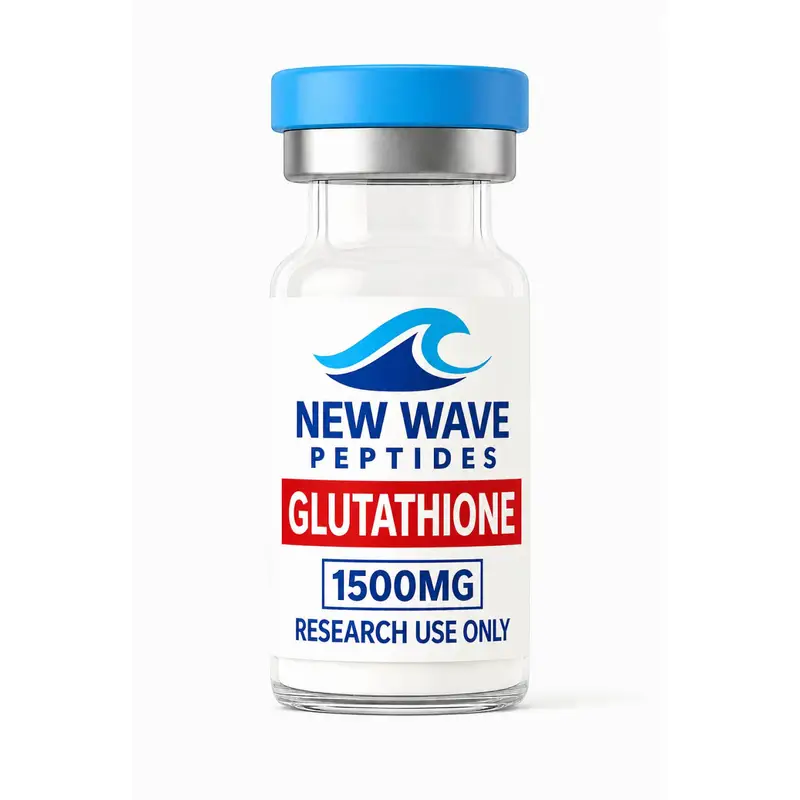

High-Purity Glutathione Injection for Laboratory Research
Scientists actively rely on reliable antioxidants to study cellular redox balance. Therefore, New Wave Peptides supplies a High-Purity Glutathione Injection for Laboratory Research to support advanced biochemical studies. First, researchers utilize this master antioxidant to investigate oxidative stress pathways in controlled in vitro models. Consequently, it allows scientists to observe precise cellular responses to reactive oxygen species. Furthermore, we guarantee >99% purity via independent third-party HPLC testing, ensuring your experimental data remains completely accurate and reproducible.
What is Glutathione?
Scientists classify glutathione injection as a master antioxidant and a naturally occurring tripeptide composed of glycine, cysteine, and glutamate. Researchers actively utilize this compound to study cellular redox balance and detoxification pathways in controlled in vitro models. Consequently, it helps scientists observe exactly how cells neutralize reactive oxygen species (ROS) and maintain metabolic homeostasis. Therefore, New Wave Peptides supplies strictly research-grade glutathione, ensuring your laboratory receives a >99% pure compound for accurate, reproducible biochemical data.
Why Choose Glutathione from New Wave Peptides
When researchers source antioxidants, vendor reliability directly dictates experimental success. Therefore, New Wave Peptides delivers only the highest quality glutathione for your laboratory studies:
- Uncompromising Purity: Independent third-party laboratories test every single batch via advanced HPLC and Mass Spectrometry. Consequently, we guarantee >99% purity.
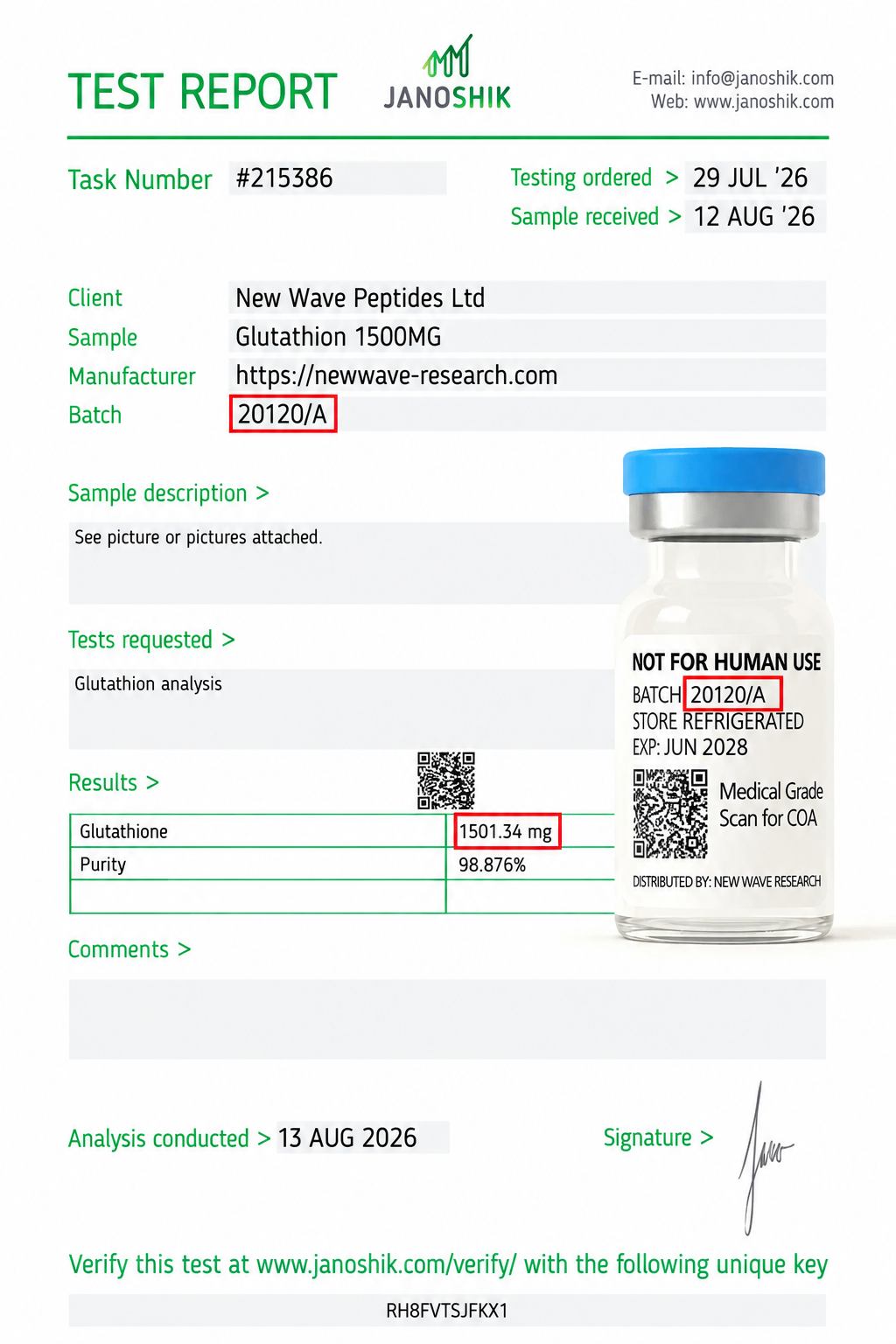
- Absolute Transparency: We provide a comprehensive, batch-specific Certificate of Analysis (CoA) with every order so you can verify the exact chemical profile.
- Rapid Logistics: Our dedicated team processes and ships all orders within 24 hours using temperature-controlled, discreet packaging.
- Reproducible Data: Choosing us ensures your laboratory receives a premium, contaminant-free compound for accurate and reliable biochemical research.
Key Glutathione Benefits in Laboratory Research
When scientists investigate cellular health, glutathione injection benefits consistently stand out in current scientific literature. Researchers primarily study this master antioxidant for its profound ability to influence intracellular redox balance. Below, we list the primary benefits scientists observe when utilizing this compound in controlled in vitro environments:
- Cellular Redox Homeostasis: Researchers actively utilize glutathione to study how cells neutralize reactive oxygen species (ROS). Consequently, it serves as a vital tool for investigating oxidative stress mitigation without external chemical interference.
- Phase II Detoxification Pathways: Scientists observe how this tripeptide conjugates with metabolic byproducts and toxins in hepatic cell models. Therefore, it remains an essential reagent for advanced metabolic and biochemical research.
- Immune Cell Support: Studies highlight its capacity to maintain optimal function in isolated immune cell cultures. Laboratories frequently incorporate it to investigate cellular defense mechanisms and inflammatory responses in vitro.
- Apoptosis Prevention: It actively helps protect cellular integrity by mitigating oxidative stress-induced cell death. Ultimately, this provides a highly reliable model for longevity, neuroprotection, and regenerative biology studies.
Glutathione Side Effects in Research Settings
When evaluating research compounds, understanding the safety profile is essential. Fortunately, current scientific literature indicates that glutathione side effects are generally mild and infrequent in controlled laboratory models. Researchers consistently observe a favorable tolerability profile during in vitro and in vivo studies. However, rigorous protocols require scientists to monitor potential variables to ensure accurate data.
Below is a concise list of observations from research settings:
- Mild Localized Reactions: In in vivo murine models, scientists occasionally note temporary redness or slight swelling at the administration site.
- Transient Gastrointestinal Responses: At high experimental dosages, researchers sometimes observe mild, temporary digestive distress in animal models.
- Purity-Related Variables: Scientists recognize that most adverse reactions in the broader chemical market stem from low-purity batches, solvent residues, or heavy metal contaminants, not the glutathione molecule itself. Therefore, sourcing verified, >99% pure compounds is critical to preventing confounding data.
Frequently Asked Questions (FAQs)
What does glutathione do in research?
In laboratory settings, scientists actively utilize glutathione to study cellular redox balance. Specifically, it serves as a master antioxidant in in vitro models, helping researchers observe exactly how cells neutralize reactive oxygen species (ROS) and maintain metabolic homeostasis.
In laboratory settings, scientists actively utilize glutathione to study cellular redox balance. Specifically, it serves as a master antioxidant in in vitro models, helping researchers observe exactly how cells neutralize reactive oxygen species (ROS) and maintain metabolic homeostasis.
Does glutathione lighten skin?
While anecdotal human reports often claim skin-lightening effects, New Wave Peptides strictly sells glutathione for laboratory research, not human consumption. In scientific literature, researchers observe that glutathione influences melanin synthesis pathways in vitro by interacting with tyrosinase, but we do not endorse or supply this compound for cosmetic human use.
While anecdotal human reports often claim skin-lightening effects, New Wave Peptides strictly sells glutathione for laboratory research, not human consumption. In scientific literature, researchers observe that glutathione influences melanin synthesis pathways in vitro by interacting with tyrosinase, but we do not endorse or supply this compound for cosmetic human use.
Is glutathione safe?
In controlled laboratory environments, researchers generally observe a favorable tolerability profile for research-grade glutathione. However, scientists must always handle this compound with appropriate personal protective equipment (PPE) and adhere to strict sterile protocols to prevent contamination and ensure experimental safety.
In controlled laboratory environments, researchers generally observe a favorable tolerability profile for research-grade glutathione. However, scientists must always handle this compound with appropriate personal protective equipment (PPE) and adhere to strict sterile protocols to prevent contamination and ensure experimental safety.
What to avoid when handling glutathione?
When preparing glutathione for research, scientists must avoid vigorous shaking, as this degrades the molecular structure. Furthermore, researchers must avoid exposure to high heat, direct light, or low-purity solvents, as these factors rapidly compromise the chemical stability of the compound. Importantly, this product is not for human ingestion.
When preparing glutathione for research, scientists must avoid vigorous shaking, as this degrades the molecular structure. Furthermore, researchers must avoid exposure to high heat, direct light, or low-purity solvents, as these factors rapidly compromise the chemical stability of the compound. Importantly, this product is not for human ingestion.
Is glutathione good for skin in scientific studies?
In dermatological research models, scientists study glutathione to understand its role in protecting dermal fibroblasts from oxidative stress. While in vitro studies show it supports extracellular matrix integrity, New Wave Peptides supplies this compound exclusively for laboratory investigation, not for human topical or systemic application.
In dermatological research models, scientists study glutathione to understand its role in protecting dermal fibroblasts from oxidative stress. While in vitro studies show it supports extracellular matrix integrity, New Wave Peptides supplies this compound exclusively for laboratory investigation, not for human topical or systemic application.
When do researchers administer glutathione?
Because this product is strictly for laboratory research, it is not intended for human consumption or dosing. In preclinical murine studies, scientists typically administer glutathione according to specific, peer-reviewed experimental protocols designed to evaluate cellular metabolic responses at designated intervals.
Because this product is strictly for laboratory research, it is not intended for human consumption or dosing. In preclinical murine studies, scientists typically administer glutathione according to specific, peer-reviewed experimental protocols designed to evaluate cellular metabolic responses at designated intervals.
What happens when researchers remove glutathione from a study?
As a research chemical, this compound is not intended for human use. In laboratory settings, when scientists remove glutathione from an in vitro culture, they observe a return to baseline oxidative stress levels. Consequently, this allows researchers to study the compound’s specific, reversible effects on cellular metabolism.
As a research chemical, this compound is not intended for human use. In laboratory settings, when scientists remove glutathione from an in vitro culture, they observe a return to baseline oxidative stress levels. Consequently, this allows researchers to study the compound’s specific, reversible effects on cellular metabolism.
⚠️ Important Research Disclaimer
Please note: The information provided above is strictly for educational and informational purposes. This product is sold exclusively by New Wave Peptides for in-vitro and laboratory research purposes. It is not intended for human or animal consumption, nor is it designed to diagnose, treat, cure, or prevent any disease. Always handle research chemicals with appropriate safety protocols.

Reviews
There are no reviews yet.