
Buy Research-Grade GHK-Cu Peptide | New Wave Peptides
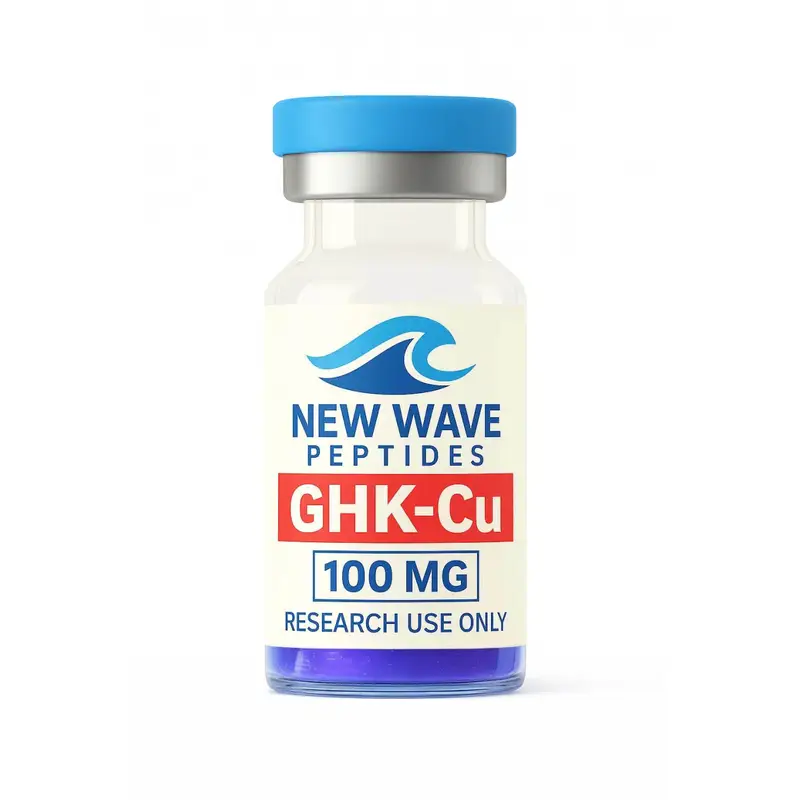
When scientists investigate cellular regeneration and tissue repair, GHK-Cu peptide always emerges as a top research compound. Firstly, researchers use this naturally occurring copper-binding tripeptide to study its extremely great influence on gene expression and cellular signaling pathways in controlled in vitro models. As a result, this targeted approach allows laboratories to observe significant up-regulation of antioxidant defenses and structural protein synthesis. Furthermore, New Wave Peptides supplies only the highest purity GHK-Cu to ensure your experimental data remains accurate, reliable, and reproducible. Therefore, by choosing our carefully third-party tested compound, you equip your laboratory with a premium research tool that actively advances the frontiers of peptide science.
What is GHK-Cu Peptide?
Mechanism of Action in Cellular Models
Driving Advanced Laboratory Research Forward
Why Choose GHK-Cu from New Wave Peptides
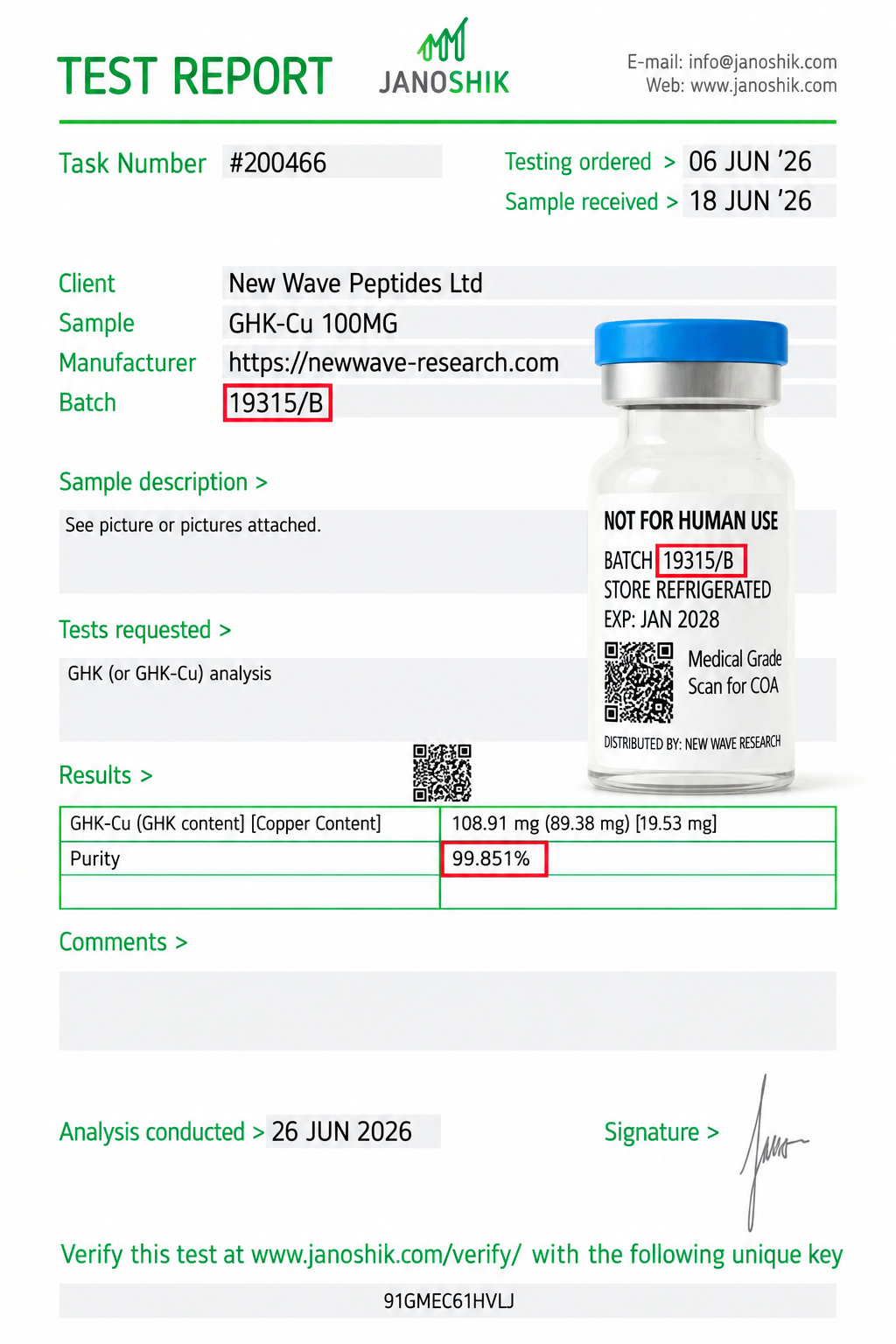
- Firstly, Uncompromising Purity Standards: We synthesize our compounds in state-of-the-art facilities under strict quality controls. Specifically, independent, third-party laboratories test every single batch using advanced HPLC and Mass Spectrometry. Therefore, we guarantee a purity level exceeding 99%, eliminating the risk of contaminant-induced data skewing.
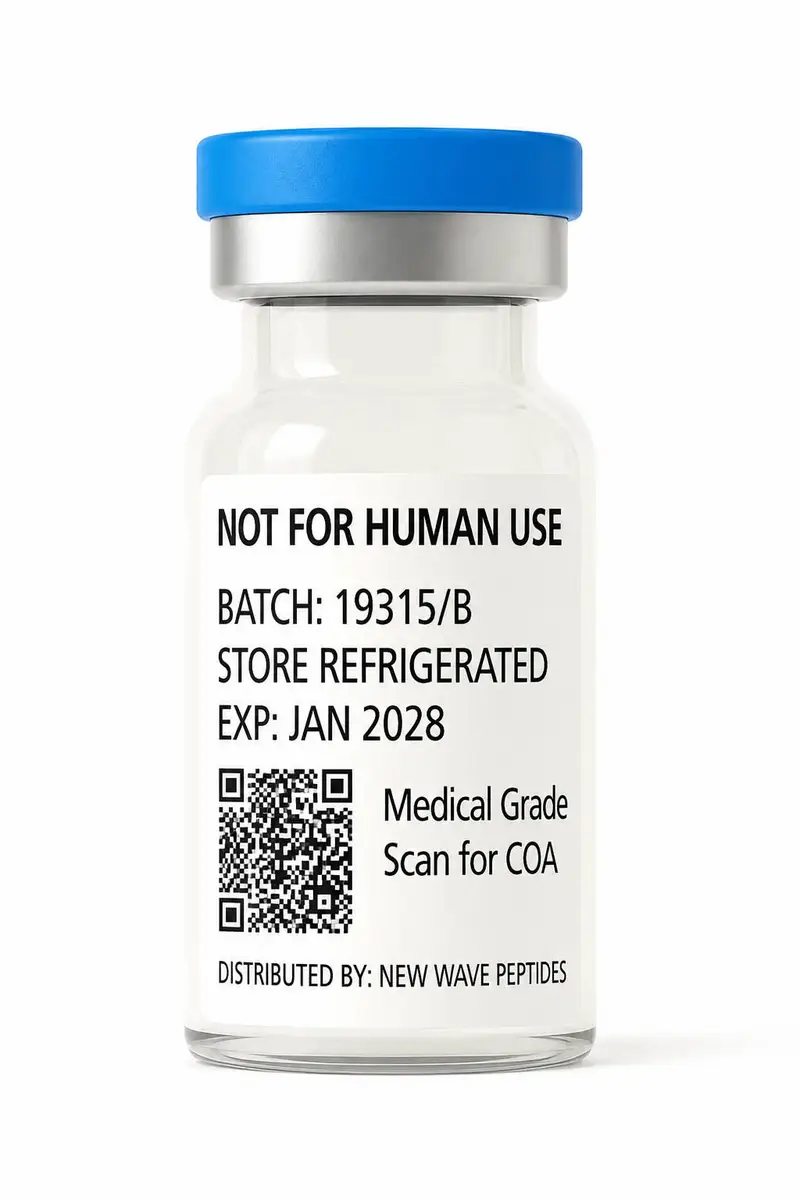
- Secondly, Absolute Transparency: We believe scientists deserve complete visibility into their materials. Consequently, we provide a comprehensive, batch-specific Certificate of Analysis (CoA) for every order. You can easily verify these independent test results directly on our website before you finalize your purchase.
- Additionally, Expert Research Support: Our dedicated team consists of professionals who understand the nuances of peptide and copper-complex research. Whenever you have questions regarding reconstitution, storage protocols, or handling, our experts provide rapid, accurate, and science-backed assistance.
- Finally, Rapid and Discreet Logistics: We recognize that research timelines are critical. Therefore, our logistics team processes and ships all orders within 24 hours. We utilize temperature-controlled, plain, and unmarked packaging to ensure your GHK-Cu arrives quickly, safely, and with complete confidentiality.
GHK Cu Peptide: High-Purity Copper Complex for Advanced Lab Research
Key GHK-Cu Peptide Benefits in Laboratory Research
- First, Gene Expression Modulation: Researchers observe that this peptide actively resets cellular genes to a healthier baseline state. Consequently, it upregulates genes associated with cellular health while downregulating those linked to metastasis and inflammation in cell cultures.
- Furthermore, Enhanced Antioxidant Defense: The compound significantly boosts the cell’s natural antioxidant capacity. Specifically, it stimulates the production of superoxide dismutase (SOD), allowing scientists to study advanced oxidative stress mitigation in cellular models.
- Additionally, Extracellular Matrix Synthesis: Studies highlight its capacity to stimulate collagen and elastin production in dermal fibroblast models. Because of this, laboratories frequently utilize it to investigate tissue repair mechanisms and structural protein synthesis.
- Moreover, Angiogenesis Promotion: Scientists actively use this peptide to research new blood vessel formation. It promotes the proliferation of endothelial cells, making it a vital tool for vascular biology and wound healing research models.
- Finally, Inflammatory Marker Reduction: It actively downregulates pro-inflammatory cytokines in cellular assays. Therefore, researchers incorporate it into studies focused on resolving chronic inflammation and restoring cellular homeostasis.
Ghk-Cu Side Effects
- Mild injection site reactions (redness, swelling, or temporary itching).
- Transient fatigue or lethargy.
- Mild headaches or lightheadedness.
- Temporary gastrointestinal discomfort or nausea.
- Potential copper overload symptoms (typically linked to low-purity compounds or improper research protocols).
Frequently Asked Questions (FAQs)
In controlled laboratory settings, researchers generally observe a favorable tolerability profile for the GHK-Cu peptide. However, scientists must always handle this compound with appropriate personal protective equipment (PPE) and adhere to strict sterile protocols to ensure safety and prevent contamination in the lab.
New Wave Peptides does not provide dosing for human consumption, as this product is strictly for laboratory research. In preclinical murine models, scientists typically explore dosages ranging from 1 to 2 mg/kg of body weight, often administered intermittently. Researchers must always consult current, peer-reviewed scientific literature to determine the appropriate protocol for their specific study design.
For in vivo animal studies, researchers typically administer GHK-Cu via subcutaneous (subQ) or intraperitoneal (IP) injection. Importantly, this compound is not intended for human injection or consumption. Scientists must always follow their institutional animal care and use committee (IACUC) guidelines for proper administration.
In preclinical research models, scientists typically observe cellular and tissue-level changes over a period of 4 to 8 weeks of consistent administration. The exact timeline varies significantly based on the specific research parameters, the model organism, and the study objectives.
Scientists prepare this compound by reconstituting the lyophilized powder with high-quality bacteriostatic water. They gently swirl the vial to dissolve the peptide, actively avoiding vigorous shaking to protect the molecular structure. After reconstitution, researchers must strictly store the solution in a refrigerator (2°C to 8°C) to maintain chemical stability.

Reviews
There are no reviews yet.