
CJC-1295 No DAC | High-Purity, Lab-Tested Research Peptide
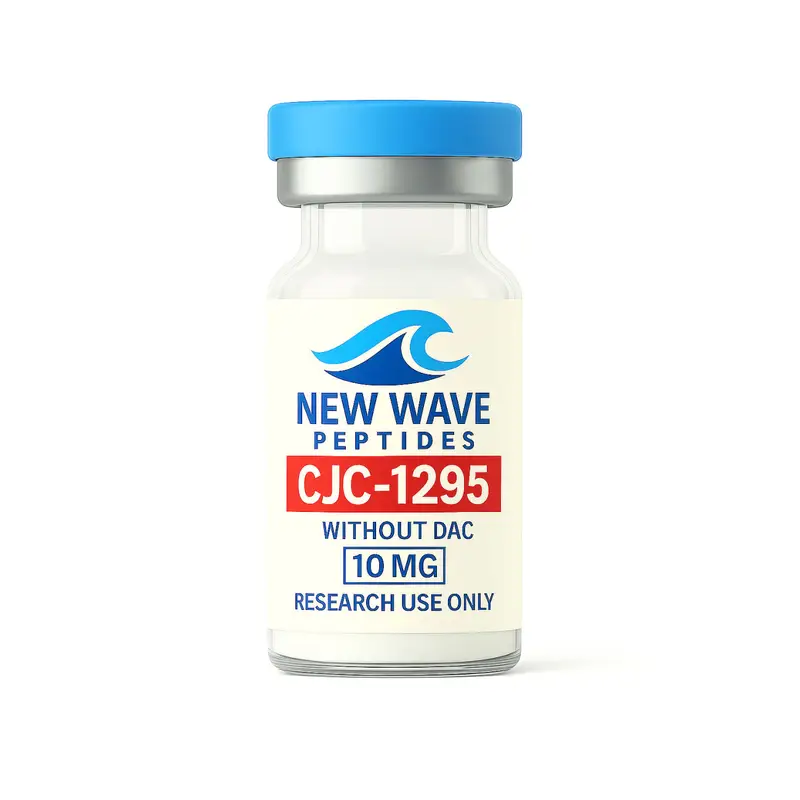
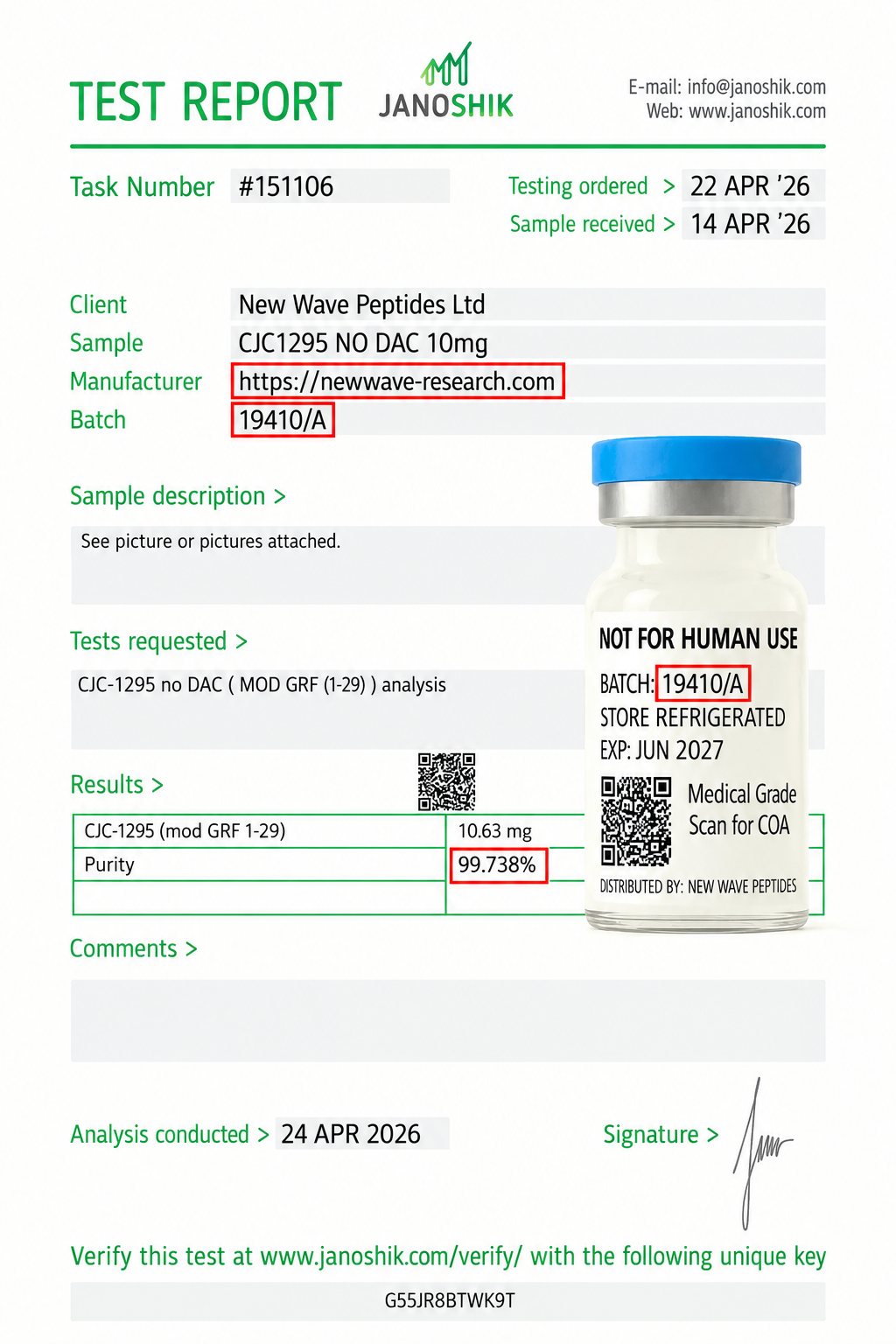
When sourcing advanced research compounds, scientists rely on New Wave Peptides for premium CJC-1295 No DAC. Specifically, this synthetic peptide is highly valued in laboratory settings for studying growth hormone-releasing hormone (GHRH) analogues and complex cellular signaling pathways. Furthermore, we guarantee uncompromising quality by subjecting every batch to rigorous, independent third-party testing to ensure ≥99% purity and precise molecular weight. Consequently, UK researchers trust our transparent, batch-specific Certificates of Analysis (CoAs) to achieve accurate, reproducible in-vitro experimental results. Please note that this product is strictly intended for laboratory research and development purposes only, and is not for human consumption, injection, or therapeutic application.
What is CJC-1295 No DAC?
Understanding the CJC-1295 Peptide
Technical Specifications: CJC-1295 No DAC
- Peptide Name: CJC-1295 No DAC (also scientifically known as Mod GRF 1-29).
- Amino Acid Sequence: A synthetic 29-amino acid Growth Hormone-Releasing Hormone (GHRH) analogue.
- Molecular Formula: C152H252N44O42
- Molecular Weight: 3367.86 g/mol
- Purity: ≥ 99% (Verified via independent HPLC and Mass Spectrometry analysis).
- Physical Appearance: We supply this compound as a sterile, white, lyophilized (freeze-dried) powder to ensure maximum chemical stability during transit and storage.
- Solubility: Researchers can easily dissolve this powder in high-purity bacteriostatic water for in-vitro experimental use.
- Storage Protocol: We recommend storing the lyophilized powder at -20°C. Once reconstituted, researchers must store the solution at 2°C to 8°C (refrigerated) and utilize it within 21 to 30 days to prevent peptide degradation.
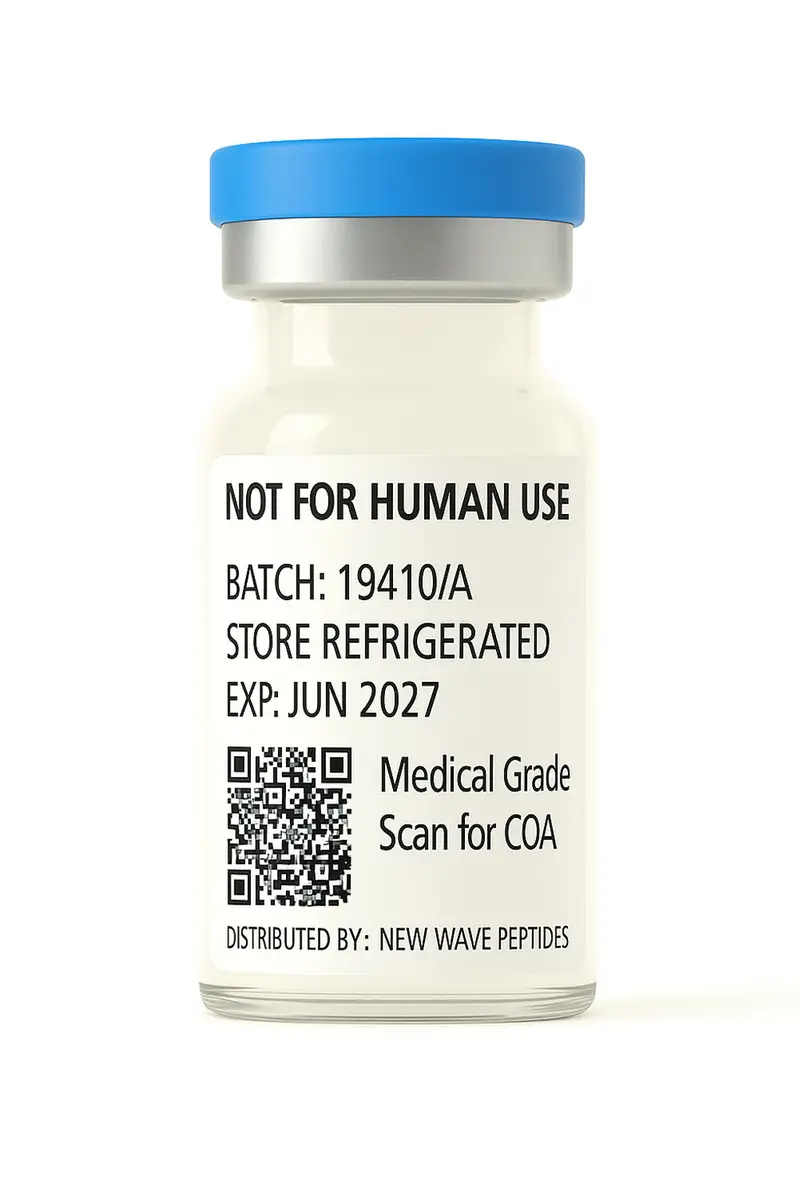
- Packaging: We seal each vial with a medical-grade butyl rubber stopper and an aluminum flip-off cap to actively prevent moisture ingress and contamination.
Why Choose New Wave Peptides for Your CJC-1295 No DAC Supply?
- Rigorous Third-Party Testing: We subject every single batch to independent High-Performance Liquid Chromatography (HPLC) and Mass Spectrometry analysis. Consequently, we guarantee ≥99% purity and exact molecular weight before the product ever reaches your laboratory.
- Absolute Transparency: We never hide our results. Furthermore, we provide downloadable, batch-specific Certificates of Analysis (CoAs) directly on our product pages. This allows you to verify the chemical integrity and absence of contaminants in your research materials instantly.
- Fast, Secure UK Dispatch: We know research timelines demand reliability. Additionally, we securely package and ship all orders directly from our UK facilities via premium, fully tracked couriers. As a result, you completely avoid international customs delays and receive your compounds promptly.
- Dedicated Researcher Support: Our customer service team consists of knowledgeable professionals who understand the specific logistical needs of scientific laboratories. If you have questions about storage protocols, reconstitution, or shipping, we provide prompt, accurate guidance.
How to Handle and Reconstitute CJC-1295 No DAC for Research
First, researchers must ensure a sterile environment. We recommend wiping the rubber stopper of the peptide vial and the bacteriostatic water vial with an alcohol swab before handling.
Next, scientists carefully draw the desired amount of high-purity bacteriostatic water into a sterile syringe. They then inject the water gently down the inside wall of the peptide vial. Consequently, this prevents the liquid from hitting the lyophilized powder directly, which protects the fragile peptide bonds from shearing or denaturing.
After adding the solvent, researchers must gently swirl the vial in a circular motion until the powder fully dissolves. We strictly advise against shaking or vigorously agitating the vial, as this introduces bubbles and can degrade the molecular structure of the CJC-1295 No DAC.
Finally, once reconstituted, scientists must store the solution in a refrigerator at 2°C to 8°C. Researchers should utilize the reconstituted peptide within 21 to 30 days to prevent bacterial growth or chemical degradation, ensuring accurate and reproducible in-vitro experimental results.
Frequently Asked Questions (FAQs)

Reviews
There are no reviews yet.